
The Fourth Most Common Ingredient in America
According to the Environmental Working Group, which rates more than 150,000 foods in its Food Scores database, "natural flavors" is the fourth most common ingredient on American food labels — listed only behind salt, water, and sugar.
It appears in nearly one in three products in their database.
Given that prevalence, you'd expect some transparency about what it actually is. What you get instead is a two-word catch-all that tells you almost nothing.
What the FDA Actually Says
The FDA defines "natural flavor" under Title 21 of the Code of Federal Regulations. The technical definition is long, but the summary is this: a natural flavor must originate from a natural source. That source can be a plant, an animal, a fruit, a vegetable, a dairy product, meat, fish, poultry, eggs, fermentation products, or any number of other biological materials.
The key phrase in the regulation is that the flavor's "significant function in food is flavoring rather than nutritional." In other words, natural flavors are added purely for taste — not to provide any benefit to you.
And here's the part that matters: the FDA doesn't require companies to disclose what those natural sources actually are. The exact formulation is protected as a trade secret.
You see two words. Behind those two words could be dozens or hundreds of individual compounds.
The Trade Secret Problem
The flavor industry operates largely behind closed doors. Major flavor houses — the companies that create flavor compounds for food brands — treat their formulas as proprietary recipes. According to a 2024 report from the Center for Science in the Public Interest, commercial flavor compounds can include more than 100 individual ingredients, including solvents, emulsifiers, flavor modifiers, and preservatives.
Those additional ingredients — the carriers and processing aids — often make up 80 to 90 percent of the total mixture. They don't have to be listed separately on the label.
So when you see "natural flavors" on an ingredient list, you're not seeing one thing. You're seeing a placeholder for an undisclosed mixture that could be simple or could be remarkably complex — and you have no way to know which.
What "Natural" Does and Doesn't Mean Here
The distinction between natural and artificial flavors comes down entirely to source material, not chemical structure. A natural flavor must be extracted from a plant or animal. An artificial flavor is synthesized from a non-biological chemical.
But here's the thing: both types can end up as the same molecule. A compound derived from a fruit and an identical compound built in a lab from petrochemicals can be chemically indistinguishable. The label "natural" tells you where it started, not what it is or how it was processed to get to your drink.
The flavor industry has also made the gap between the two categories smaller over time. Processes like fermentation and enzymatic extraction can turn plant material into highly processed chemical compounds — all of which still qualify as "natural" under the current definition.
McDonald's famously derived its "natural beef flavor" from wheat and milk derivatives. Castoreum — a substance from beaver glands — has historically qualified as a natural flavor for vanilla-adjacent applications. The label "natural" is doing a lot of work that the word doesn't actually support.
Why This Matters for What You Drink
For most people, natural flavors aren't a significant health risk. The FDA requires that they be Generally Recognized as Safe (GRAS) before use, and there's no strong evidence that the category as a whole causes harm.
But there are real reasons to pay attention:
Allergen ambiguity. Natural flavors can be derived from dairy, soy, nuts, fish, or other common allergens. The label doesn't say which. For people with sensitivities or dietary restrictions, "natural flavors" is genuinely uninformative in a way that creates risk.
Ethical and dietary concerns. Vegans, vegetarians, and people following religious dietary laws have no way to know whether a "natural flavor" is derived from an animal source. A product can be marketed as plant-based and still contain a natural flavor with animal origins.
Transparency as a baseline expectation. The clean label movement exists because consumers increasingly expect to know what they're actually eating and drinking. A two-word catch-all that legally conceals dozens of compounds feels increasingly out of step with that expectation.
What Real Transparency Looks Like
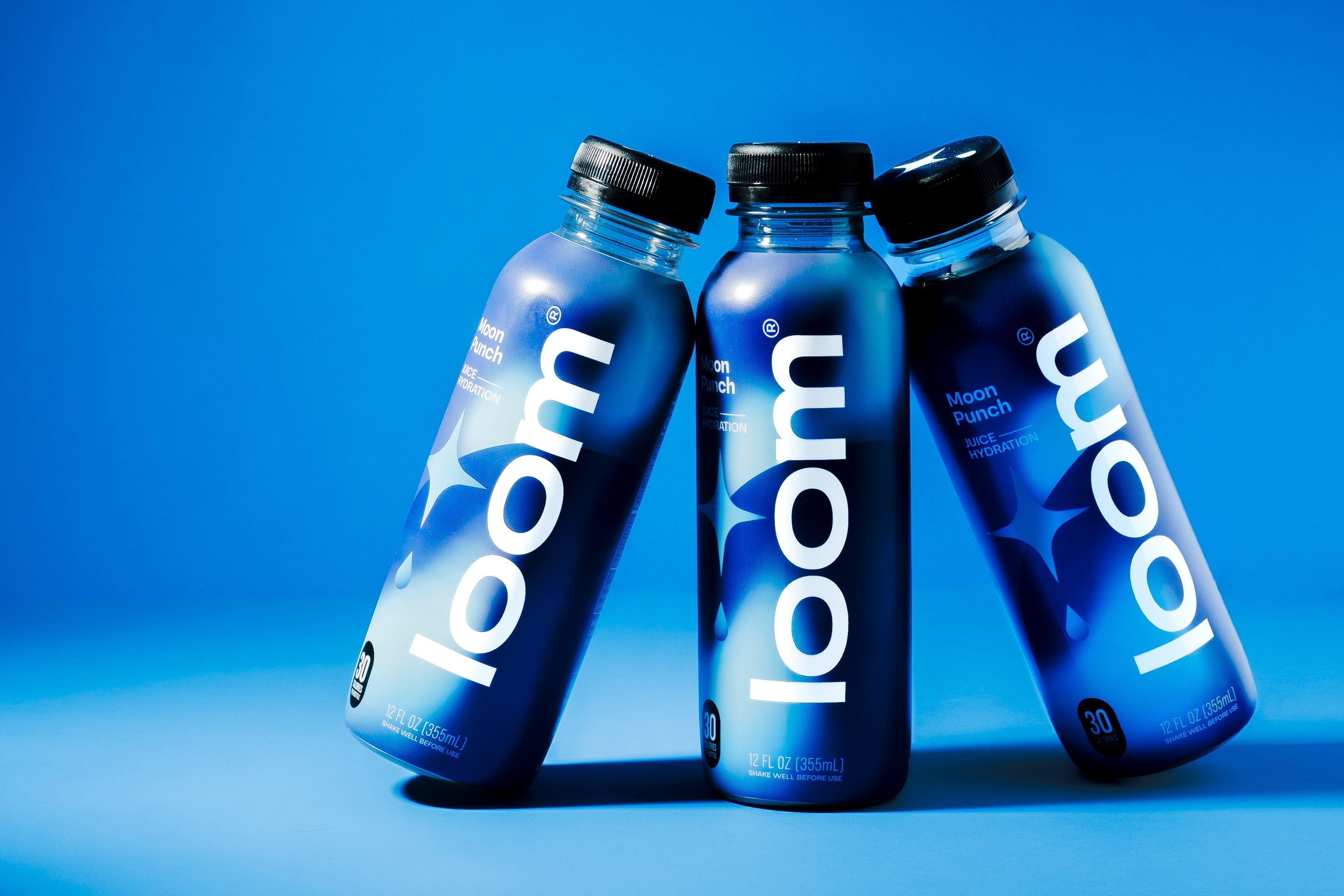
Loom doesn't use "natural flavors" as a crutch. When something is in our drinks, we name it. Real fruit. Real ingredients. The kind of label you can actually read and understand without a law degree or a chemistry background.
That's not a marketing angle. It's just a baseline we think every drink should clear.
The next time you pick up a bottle and see "natural flavors" somewhere in the list, it's worth asking: what flavor? From what? Why won't they say?
Those are good questions. You deserve actual answers.
Sources:
-
Environmental Working Group — Natural and Artificial Flavors: Understanding the Differences (2026)
-
Center for Science in the Public Interest — Flavor Report (2024)
-
FDA Code of Federal Regulations Title 21 § 101.22 — Natural Flavors
-
LegalClarity — FDA Natural Flavors List: Definitions and Regulations
-
Laird Superfood — Beyond the Label: The Truth Behind "Natural Flavors"
