
Flip over almost any beverage bottle in the natural products aisle and you'll find a row of certification badges. Non-GMO Project Verified. Certified Gluten-Free. Vegan. Kosher. Sometimes all four on the same label.
Most people scan these and feel a general sense of reassurance. Fewer people know what any of them actually required the brand to do. Some certifications involve rigorous third-party testing and ongoing audits. Others are essentially self-declarations with no independent verification at all.
Here's what's actually behind each label, and why the distinction matters.
Non-GMO Project Verified
What GMO means: A genetically modified organism is a plant, animal, or microorganism whose genetic material has been altered through laboratory biotechnology — techniques that introduce gene sequences that don't occur in nature or that wouldn't result from conventional breeding. Most GMO crops currently grown commercially have been engineered to produce their own pesticide, resist herbicides, or increase yield.
What the certification requires: The Non-GMO Project Verified label — recognizable by its butterfly logo — is issued by a nonprofit organization that operates North America's most rigorous standard for GMO avoidance. To earn it, products must be evaluated by one of four independent technical administrators approved by the Non-GMO Project. The process includes on-site inspections, documentation review, and regular laboratory testing of high-risk ingredients (primarily corn and soybeans, which are among the most widely genetically modified crops). For human food products, all testable ingredients must contain less than 0.9% GMO material. The verification must be renewed annually.
What it doesn't mean: Non-GMO verification is not the same as USDA Organic certification. Organic products are grown without synthetic pesticides and may not use GMO seeds, but the National Organic Program does not require testing for GMO contamination — and testing has revealed that contamination can occur in certified organic supply chains. The Non-GMO Project itself has found that even certified organic products can test above threshold. This is why some brands carry both certifications: the two address different aspects of production.
Why it matters: The Non-GMO Project Verified seal now represents approximately $48.9 billion in annual product sales and has been applied to over 66,000 unique-formula products. It is the most widely recognized food certification in North America after USDA Organic. For consumers who want third-party verification — not just a brand's own claim — the butterfly label means independent testing actually happened.
Certified Gluten-Free
What gluten is: Gluten is a family of proteins found naturally in wheat, rye, barley, and crossbreeds of those grains. For people with celiac disease — estimated to affect up to 3 million Americans — consuming gluten triggers an immune response that damages the lining of the small intestine, leading to serious nutritional and health consequences. Non-celiac gluten sensitivity affects additional millions who experience symptoms without the autoimmune response.
What the FDA requires: Since 2013, the FDA has defined "gluten-free" for voluntary use on food labels: any product carrying the claim must contain fewer than 20 parts per million (ppm) of gluten. This is the lowest level that can be reliably detected with currently validated analytical methods, and has been established as safe for most people with celiac disease. The claim covers all synonymous terms: "no gluten," "free of gluten," "without gluten." Importantly, the gluten-free labeling rule is voluntary — brands are not required to label their products gluten-free even if they qualify — but if they choose to use the claim, they must comply with the federal standard.
What certification adds: The FDA does not require manufacturers to test their products for gluten compliance — only to ensure compliance through their ingredient sourcing and production controls. Third-party gluten-free certification programs, such as those offered by the Gluten-Free Certification Organization (GFCO) and NSF International, add an additional layer: independent auditing of manufacturing facilities and, in many cases, testing to a stricter threshold than the FDA's 20 ppm standard. In a study of 275 foods labeled gluten-free, 98.9% tested compliant — but among products with no gluten-free label and no obvious gluten ingredients, 19.4% contained more than 20 ppm of gluten, underscoring the value of the label itself.
Why it matters beyond celiac: The gluten-free label isn't only relevant to people with diagnosed conditions. Eliminating gluten-containing grains from a diet can coincidentally reduce processed food consumption. And for anyone managing a household with a family member who has celiac disease, a verified gluten-free label on a beverage provides confidence that the product was handled and verified, not just assumed to be safe.
Vegan
What it means: A product labeled vegan contains no animal-derived ingredients and, depending on the certifying organization, was not produced using processes that involve animal exploitation. For beverages, this typically means no milk, dairy derivatives, honey, gelatin (sometimes used as a fining agent in juice or wine production), or animal-based colorings like carmine (derived from beetles, used in some red and pink drinks).
The verification gap: Unlike gluten-free and Non-GMO Project labels, "vegan" is not a federally regulated term in the United States. A brand can print "vegan" on its label based solely on its own assessment of its ingredients, with no third-party verification required. Third-party vegan certifications do exist — organizations like Vegan Action and The Vegan Society's Certified Vegan program conduct independent audits — but they are not required to use the word.
What to look for: For consumers who prioritize verified claims over self-declarations, look for a recognized third-party vegan certification seal rather than just the word "vegan" on the label. For most beverages without obvious animal-derived ingredients, the practical difference may be small — but the lack of regulation means the word alone is a brand promise, not an independently verified fact.
Kosher
What it means: Kosher certification indicates that a food or beverage has been produced in accordance with Jewish dietary law (kashrut). For beverages, the most relevant requirements generally include: that the product contains no non-kosher animal derivatives, that wine and grape products meet specific production requirements if applicable, that the production facility and equipment meet kosher standards, and that the production process was supervised by a qualified certifying agency.
What certification actually involves: Kosher is one of the most rigorously third-party verified certifications in the food industry. Recognized certifying agencies — such as the Orthodox Union (OU), OK Kosher, and Star-K — conduct on-site inspections of facilities, review ingredient sourcing, and provide ongoing supervision. Unlike "vegan," a brand cannot self-declare kosher status and have it carry the same meaning. The presence of a recognized kosher symbol on a product means an independent agency has verified and continues to supervise the production.
Why non-observant consumers care: Kosher certification has grown well beyond its original audience. Many consumers — including those who keep halal, those with certain food allergies, and those who simply want third-party production oversight — look for kosher symbols as a secondary quality signal. The certification's value lies partly in what the ongoing supervision implies: a third party with standing requirements is reviewing how the product is made.
How to Read a Label With All Four
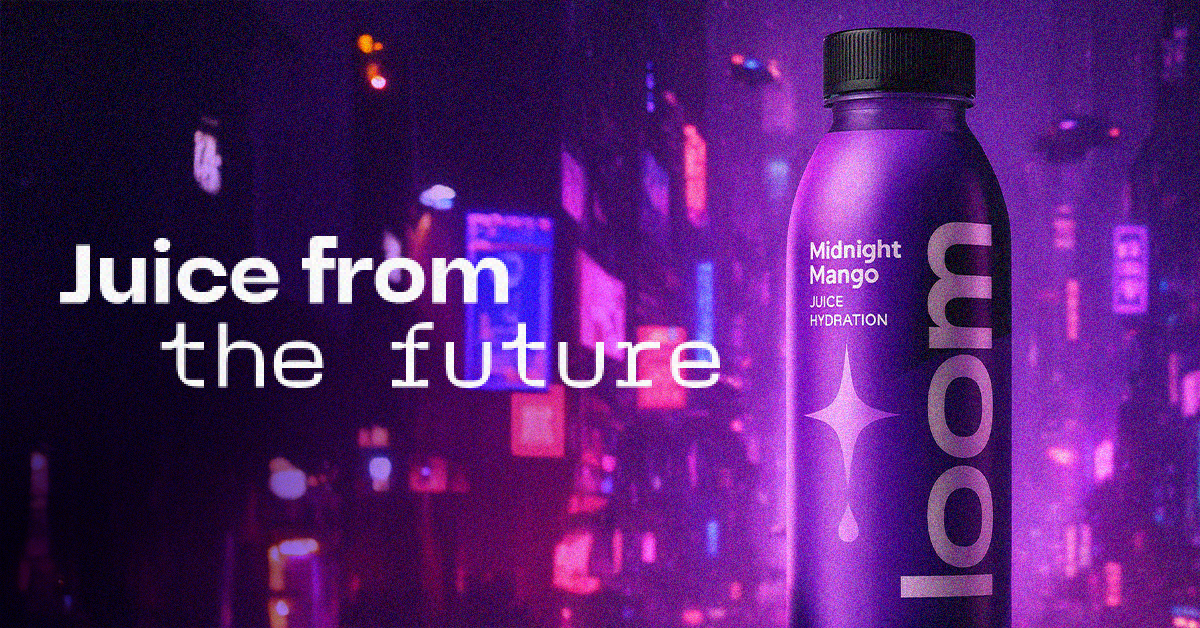
When a product carries Non-GMO Project Verified, Certified Gluten-Free, Vegan, and Kosher together — as Loom does — each certification has a different relationship to verification rigor:
-
Non-GMO Project Verified — independent testing, annual renewal, enforceable threshold
-
Certified Gluten-Free — FDA-defined standard; third-party certification adds testing and facility audits
-
Vegan — meaningful if third-party certified; a self-declaration without a seal is a brand's own assertion
-
Kosher — one of the most robust third-party verification systems in the food industry
Together, they represent meaningful transparency about what's in the bottle, how it was made, and that someone other than the brand itself has verified the claims. In a market where self-declaration and regulation-free buzzwords are common, certifications that required actual auditing and ongoing compliance are worth the badge.
What This Means for Loom
Loom carries all four certifications because the product actually qualifies for all four — non-GMO sourcing, less than 20 ppm gluten, no animal-derived ingredients, kosher-supervised production. These aren't marketing tactics bolted onto a product that wouldn't otherwise merit them. They're descriptions of what the drink actually is.
That, combined with no added sugar, 1/4 the calories of traditional juice, and aseptic bottling that preserves real fruit flavor without hot-fill plastic contamination risk — is what an honest label looks like.
Sources
-
Non-GMO Project — What Is Non-GMO Project Verified? https://www.nongmoproject.org/butterfly-label/
-
Non-GMO Project — Verification FAQ https://www.nongmoproject.org/verification-faq/
-
Consumer Reports — Non-GMO Project Verified Seal https://www.consumerreports.org/food-labels/seals-and-claims/non-gmo-project-verified
-
BevSource — Non-GMO Beverage Label Claims & Certifications https://www.bevsource.com/news/beverage-label-claims-certifications-101-non-gmo
-
FDA — Gluten-Free Labeling of Foods https://www.fda.gov/food/nutrition-food-labeling-and-critical-foods/gluten-free-labeling-foods
-
FDA — Questions and Answers on the Gluten-Free Food Labeling Final Rule https://www.fda.gov/food/nutrition-food-labeling-and-critical-foods/questions-and-answers-gluten-free-food-labeling-final-rule
-
Celiac Disease Foundation — Label Reading & the FDA https://celiac.org/gluten-free-living/gluten-free-foods/label-reading-the-fda/
-
National Celiac Association — Confusion About Food Labeling https://nationalceliac.org/celiac-disease-questions/confusion-about-food-labeling/
-
FoodSafety.gov — Gluten-Free on the Label? Now It Means Something https://www.foodsafety.gov/blog/gluten-free-label-now-it-means-something
-
Foodwit — Understanding Non-GMO Labeling https://www.foodwit.com/resource/understanding-non-gmo-labeling
